"How long should a CV be?" – A typical freelancer question nobody can really answer
Freelancers discuss page length, research backgrounds in CVs, and what needs to be on page one.
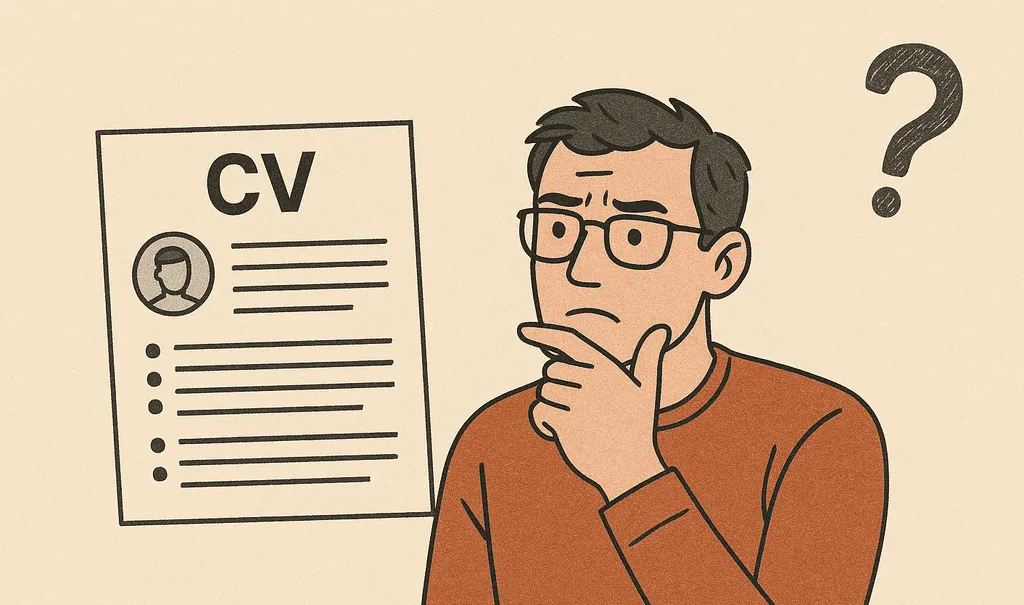
“How long should a CV be?” – A typical freelancer question nobody can really answer
The other day in a Slack channel for freelancers in the DACH region, the CV topic came up again. Or more specifically: How much is too much? And when is less actually just right?
Reading through it, I immediately thought of my own CV. It’s been through more versions than my Spotify algorithm has favorite songs. And honestly: I used to wonder whether I was even allowed to show all that stuff. The answers from the discussion were interesting – contradictory, but helpful.
1. Two pages? Three? Six? – It all depends on the format
The thread started with someone who had quite a few stops on their CV: industry, academia, research, self-employment. A colorful mix. The question: How many pages is this thing allowed to have?
Opinions ranged from “short and punchy” to “if it’s relevant, then yeah, even 14 pages.” Sounds like overkill? Maybe. But someone said, completely deadpan: “My profile is currently 6 pages – and it’s not even particularly detailed.”
I had to laugh. My longest CV was once seven pages. I never sent it out – and now I’m wondering: Maybe I should have just gone for it.
2. Page one has to land
What everyone agreed on though: The first page is everything. That’s your pitch. Not the place for a degree from 2008 or old volunteer work.
What matters: A clear title (e.g. “Senior Data Scientist / Solution Architect” instead of just “Freelancer”), a sharp profile summary, a tech/tools overview. The rest can come later – but if someone doesn’t know what you do after page one, they’re not reading page two either.
3. Old projects? Papers? Volunteer work? – Only if it fits
One topic that always comes up: What stays in, what gets cut?
Example: Research papers. The consensus was pretty clear: If you work as a DevOps engineer, nobody cares about an old paper on linear optimization.
One good idea came from someone with a research background: List publications with a short bit of context and a link rather than a full citation. Whoever wants to know more will click. Everyone else stays unbothered.
My own trick: For every section in my CV, I ask myself: Does this help someone place me faster? If not – cut it. Or shove it into an appendix.
4. Research on your CV? Depends
A lot of people in the community come from research – and struggle with how it comes across on a CV.
Real talk: Often not great.
People from research rarely get credit for being able to handle time pressure or budget constraints. That might be unfair – but it’s reality.
That doesn’t mean you should hide your research background. It means: Translate it. Not: “I researched XY.” But: “I built prototypes in cross-functional teams, structured processes, delivered results.”
Ideally in language that works in industry – without the academic fog.
5. What actually counts: Delivery + Credibility
Whether you come from research, an agency, or a corporate career: At the end of the day, what matters is what you can deliver today.
Someone in the discussion put it roughly like this:
“What you can actually do and what you can credibly communicate are two different things.”
And that’s exactly what a CV is about: Don’t just show everything you’ve ever done – show what you’re good at right now. And make it believable.
Real life over buzzwords. Examples over claims. Links, projects, talks, repos – anything that shows: I can do this, and I can do it now.
Conclusion: The perfect CV isn’t perfect – but it’s honest
You can’t write your CV for everyone at once. But you can shape it so that it fits you – and shows potential clients what they actually want to know.
If you come from research: Don’t just show results, show how you worked.
If you’ve switched industries a lot: Show the common thread that runs through it all.
And if you’re having doubts on page 3, 4, or 5 – ask yourself: Is this actually relevant? If yes: Keep it. If no: Cut it.